







As electrification, EV charging, distributed energy resources, AI-driven data centers, and weather disruptions make electricity demand more dynamic and unpredictable, utilities are being pushed beyond the limits of traditional centralized grid operations. Drawing on proven generation-side practices, distributed intelligence, next-generation DERMS, digital twins, and AI-powered analytics will enable a more resilient, scalable, and observable digital grid capable of supporting the future energy economy.
The electrical grid has reached an inflection point. Traditional grid operating models have been increasingly strained by electrification, distributed energy resources (DERs), and changing demand patterns around the globe.
The core problem grid operators face is that the electric grid was built around a relatively straightforward model many decades ago. Standard operation assumes centralized generation with transmission of bulk power and mostly stable distribution to users. That model, however, is becoming increasingly difficult to maintain.
Today, the electrical grid has seen an evolution in use driven by growing trends. The modern world has become increasingly electrified, and users are consuming significantly more power via mobile devices, appliances, and more. Electric vehicle (EV) charging creates a more dynamic environment on the distribution side of the grid, as do DERs like solar installations. Further complicating operations, modern artificial intelligence (AI)-training data centers create huge demand that most grids struggle to meet, while increasing weather-related disruptions cause grid resilience concerns.
All these challenges impact the operation of the grid differently, and they all must be dealt with to ensure a steady supply of power to a world that increasingly depends upon it. In fact, a recent ICF report predicts electricity demand to grow 21% by 2030 and 39% by 2035.1 To meet this need, utilities are being asked to manage a system that is more dynamic and more decentralized than ever.
A recent ICF report predicts electricity demand to grow 21% by 2030 and 39% by 2035.
Fortunately, the industry already possesses many of the tools needed to solve these challenges, and more are coming over the horizon. Moreover, many of the critical practices necessary to meet this shift are already in place in power generation and simply need to be adapted to develop the next-generation grid architectures. Already, organizations are exploring next-generation distributed energy resource management systems (DERMS) and advanced digital twin technology to help extend proven generation-side practices across the broader grid.
The traditional distribution model is under pressure
Current distribution architectures have become inadequate for a modern electrified world. Distribution systems were historically passive networks. Power typically flowed in one direction, from generation, through transmission, into distribution, and on to the consumer. Within that model, control has always remained highly centralized.
The traditional model has been practical for a long time because activity at the edge has remained highly predictable for decades. Energy use rose slightly as consumers woke in the morning and prepared for work, dropped as they moved into the office, and then rose again when they returned home. Large energy spikes—such as those triggered by air conditioning use on the hottest days—were relatively predictable based on weather patterns. Essentially, operators had time and latitude to adjust to the variation in the distribution system – the operational dynamics were fairly predictable and on relatively slow timescales.
Today, however, that predictability is rapidly disappearing. DERs add energy generation to the distribution side of the grid, which must be managed to maintain balance. Battery systems are proliferating, and EV charging introduces less predictable and highly variable loads. Commercial microgrids are also becoming increasingly common. Ultimately, the edge of the grid is becoming active rather than passive.
The increased activity creates uncertainty that drives complexity. The distribution side of the grid must now contend with load unpredictability, bidirectional power flow, and local generation variability. This new complexity is increasingly difficult to manage manually.
A blueprint from the generation industry
The power generation side of the grid has already solved many of the problems emerging to challenge the future of power. Power plants have operated with distributed intelligence for decades. In traditional power plants, individual generating facilities perform many critical tasks locally including making decisions, handling fault tolerance, maintaining cybersecurity, and executing high-speed control functions.
Grid operators are responsible for coordinating traditional generation facilities, but they do not control every action in real time. They rely heavily on proven automation technologies and powerful control systems to guide and support successful operation. Most importantly, the systems are distributed by design, leading to reliable, scalable, resilient operations.
Understanding how well this model works is key to improving the grid as a whole. The solution is not to invent a new model, but to expand a proven one. The opportunity for forward-thinking energy companies is to apply these same principles to distribution networks.
From centralized control to distributed digital grids
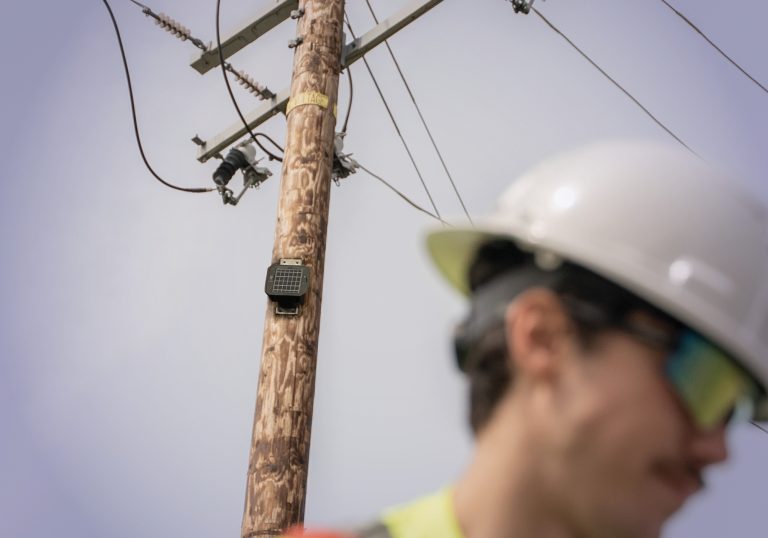
The grid edge is the evolving operational boundary where intelligent, distributed, and fast-acting resources interface with the traditional bulk power systems. These resources may be a diverse mix of DERs, EV chargers, microgrids, data centers, and flexible loads.
Increasingly, the grid edge is also where critical operational decisions must be made. In most cases today, when a decision must be made to support the grid, the critical information to make the decision must travel across the grid to arrive at a central controller. The decision is then made at the controller, and the result of the action must be propagated down from there, back to the grid edge and individual assets.
As electrification expands, this strategy becomes harder to sustain. More devices on the grid create more communications, latency, and complexity, as well as larger cyberattack surfaces.
The next-generation digital grid will rely on a more modern DERMS architecture that pushes automated intelligence into substations, supports localized closed-loop control, reduces response times, and improves scalability.
In contrast, operations become more effective and efficient when intelligence is pushed closer to the assets, as with distributed grid architectures using next-generation DERMS on edge controllers to move some critical control functions closer to the edge. In such an architecture, local controllers can perform high-speed control, local optimization, fault management, and stability functions. Central operators remain responsible for coordination and oversight, but critical decisions can be made significantly more rapidly, helping maintain stability, balance, and performance.
So, what does this next-generation grid look like? It is an evolved architecture built on highly distributed DERMS. While today’s DERMS deployments are typically highly centralized, the next-generation digital grid will rely on a more modern DERMS architecture that pushes automated intelligence into substations, supports localized closed-loop control, reduces response times, and improves scalability (Figure 1).

The same distributed systems operational model used in generation will be the foundation of a more flexible, scalable grid. The shift will support better local decision-making, increased edge analytics, localized cybersecurity, and significantly improved local resiliency.
More intelligence creates better data
A digital grid is not simply a connected grid—it is an observable grid. While utilities rely heavily on the day-to-day operational decisions that keep power flowing to consumers, they also must focus on the long-term business impacts of those decisions. As distribution-side activity becomes more complex, insight into those operations and decisions will be increasingly important.
Fortunately, as edge controllers operate closer to the workloads on the distribution side of the grid, they create high-resolution operational data. Historically, much of this data was unavailable or inaccessible to utilities, but as edge devices expand distributed control, local intelligence will allow data filtering, contextualization, and aggregation of data. Armed with contextualized data, teams will gain greater visibility into load profiles, voltage behavior, resource performance, and customer-side impacts of operational decisions.
A digital grid is not simply a connected grid—it is an observable grid.
This more observable grid has become even more important with the rise of AI. AI tools are becoming critical enablers of competitive advantage, but AI effectiveness depends on massive amounts of high-quality data. Distributed intelligence provides more data, and that data is not only higher quality, but also effectively contextualized.
Initial applications of edge data-driven AI are likely to focus on planning, forecasting, and resource allocation. In fact, today’s most advanced automation solutions providers are already incorporating these capabilities into many of their solutions, built on decades of experience operating in the power industry.
In coming years, the capability of integrated industrial AI tools in automation solutions will continue to expand, likely moving toward operational enhancement, reliability improvement, and predictive response to potential disturbances. But to unlock these capabilities, teams will need quality contextualized data to train and tune the models helping to guide their decision making (Figure 2).

Extending the digital twin for further support
Digital twins—a simulation technology in which a near-identical replica of the plant is created in a simulated environment—have been in common use in power generation for decades. The most powerful power generation control systems include fit-for-purpose digital twin technology, and generation plants of nearly every variety use them for training, optimization, procedure development, and scenario testing.
The grid increasingly requires similar capabilities. Distribution networks have become more dynamic, more decentralized, and less predictable. Digital twins can help operators safely evaluate new control schemes, operational procedures, resource deployment strategies, and the dynamic interplay between DERs. Moreover, as AI and digital twins converge, the technology has proven even more effective in predicting future states and creating a safe environment for continuous learning.
This safe environment for learning has become increasingly critical. As the grid evolves, so will its operation. Teams will often be working in uncharted territory, and developing the best strategies will require practice. But grid operators cannot experiment directly on critical infrastructure.
Digital twins provide a safe environment for exploration. Modern AI can evaluate thousands of operating scenarios in a very short time without risking safety, equipment, or reliability. Operations teams leveraging digital twins with AI will be empowered to develop new control algorithms, better reliability strategies, improved responses to off-normal operations, and faster identification of system disturbances (Figure 3).

Figure 3: The most advanced power generation control systems incorporate fit-for-purpose digital twin technology. Generation plants of nearly every type use digital twins for training, optimization, procedure development, and scenario testing.
Yet, as simulation becomes the proving ground for the future grid, teams must be careful to use fit-for-purpose simulation tools. AI is fundamentally statistical, but power systems remain governed by the laws of physics. Purely data-driven models can suggest solutions that are not physically realistic. This is why forward-thinking organizations are leveraging digital twin simulation built into power control systems coupled with industrial AI software guided by first principles models and decades of industry expertise. These solutions create better outcomes because recommendations remain grounded in how the grid actually behaves.
The future isn’t generation, transmission, and distribution. It’s simply the grid.
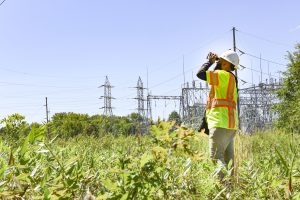
The historic separation between generation, transmission, and distribution is beginning to blur. Energy consumption is at an all-time high and is increasingly unpredictable while DERs and large variable loads such as data centers are becoming a much more significant part of the bulk power system. As a result, local intelligence is becoming as important on the distribution side of the grid as it has always been in generation (Figure 4).

Figure 4: The modern digital grid is fundamentally about extending proven practices, including distributed control, local autonomy, high-speed decision making, digital twins, and AI-enabled operations.
The modern digital grid is fundamentally about extending proven practices, including distributed control, local autonomy, high-speed decision making, digital twins, and AI-enabled operations. This is leading to a more distributed, more intelligent, and more resilient grid as the norm. Utilities wanting to remain relevant in the future energy economy will need to evolve their grids in the coming years to meet this new paradigm, or risk losing competitive advantage in what will become an increasingly tight marketplace.
The power industry does not need to invent an entirely new operating model to do this. Rather, it must take the lessons learned over decades inside generating stations and apply them to the emerging next-generation digital grid, implementing the technologies and practices that will power the future.
References: [1] ICF. “Electricity Demand Growth: How Will the Grid Keep Pace?” ICF, accessed July 15, 2026, https://www.icf.com/insights/energy/impact-rapid-demand-growth-us

Rick Kephart has over 30 years of automation experience in the power and water/wastewater industries. Over his career, he has become an expert in control systems and theory, embedded systems and real-time systems. Rick currently serves as the vice president of technology for Emerson’s power and water solutions business. He holds a B.S. in electrical engineering from Penn State University and an M.S. in electrical engineering from the University of Pittsburgh.

This article was originally published in the October 2026 issue of the Next-Gen Infrastructure & the Digital Grid magazine.
View Magazine